How the NFL’s International Expansion Is Turning American Football into a Global Sport
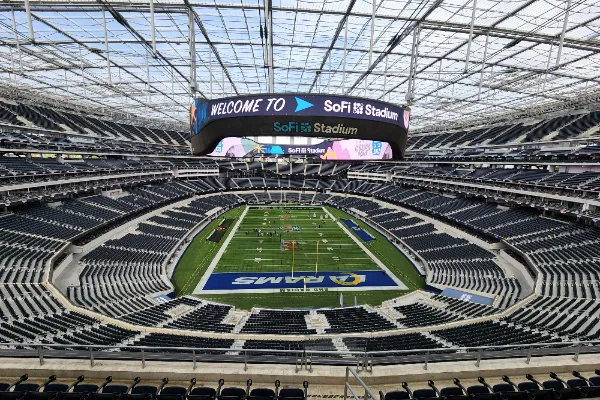
The NFL’s international strategy has moved well beyond staging an occasional showcase game in London. In 2026, the league scheduled a record nine regular-season fixtures outside the United States, spanning four continents, seven countries and eight stadiums. The programme includes games in Australia, Brazil, Britain, France, Spain, Germany and Mexico.
This expansion reflects increasing demand for American football and the commercial limits of an already mature domestic market. The NFL remains enormously successful in the United States, but future audience growth increasingly depends on converting overseas interest into sustained support.
London Established the International Blueprint
London remains the NFL’s most developed market outside North America. By the end of the 2026 schedule, the British capital will have hosted 45 regular-season games since the International Series began there in 2007. Tottenham Hotspur Stadium and Wembley now provide the league with two established venues capable of staging games to NFL standards.
British demand has proved durable. Approximately 61,000 spectators attended the Indianapolis Colts’ 30-13 victory over the Washington Commanders in October 2026. A week later, a Tottenham record crowd of 61,322 watched the Jacksonville Jaguars defeat the Philadelphia Eagles 19-17 with a field goal as time expired.
The Jaguars have developed the strongest association with London. Their game against the Houston Texans at Wembley on 18 October will be their 16th appearance in the capital and their third season featuring consecutive London fixtures. That repeated presence allows British supporters to build a more meaningful relationship with one franchise.
Interest is no longer restricted to tickets. Supporters follow DraftKings fantasy competitions, television coverage, merchandise, statistics, as well as NFL rushing odds and more on sportsbooks too, demonstrating how the league has become part of the wider European sports-media environment.
Germany and Spain Offer Further European Growth
Germany has long possessed a strong foundation for American football, partly because of the country’s experience with NFL Europe. Regular-season games in Munich, Frankfurt and Berlin have allowed the modern NFL to reconnect with that existing audience.
Munich returns to the international schedule in November 2026, when the New England Patriots face the Detroit Lions. Madrid will stage the Cincinnati Bengals against the Atlanta Falcons at the Bernabéu one week earlier. Spain first hosted a regular-season game in 2025, and its return suggests the NFL believes local interest can support a recurring event rather than a one-off attraction.
Paris represents the next significant European test. The Pittsburgh Steelers and New Orleans Saints will contest France’s first NFL regular-season game at the Stade de France on 25 October. The league also opened an international office in Paris in September 2026, giving it a permanent base for working with broadcasters, sponsors, schools and fans.
This local infrastructure is important. A sold-out game creates immediate attention, but permanent growth requires activity throughout the year.
Australia Has Become the Boldest Experiment
The NFL opened its 2026 season with the first regular-season game played in Australia. The San Francisco 49ers defeated the Los Angeles Rams 27-7 at the Melbourne Cricket Ground in front of approximately 100,000 spectators.
Australia offers an affluent sports market with established stadium infrastructure and familiarity with physical, territorial games through Australian rules football and rugby. However, its distance from the United States creates serious scheduling and travel complications.
Opening the season in Melbourne gave both teams time to prepare without interrupting an established weekly routine. Even so, future Australian fixtures will require careful management of jet lag, player recovery and competitive fairness.
The audience demonstrated that demand exists. The more difficult question is whether Australian supporters will continue following teams after they return to the United States and play at inconvenient local times.
Brazil and Mexico Connect the NFL with Latin America
The NFL has also expanded deeper into Latin America. Following two games in São Paulo, Rio de Janeiro hosted its first regular-season fixture in September 2026. The Baltimore Ravens defeated the Dallas Cowboys 34-31 after a 56-yard field goal as time expired, with the broadcast reportedly becoming the most-watched international game in NFL history.
Rio’s Maracanã Stadium will stage three NFL games over a five-year period beginning in 2026, creating continuity in one of South America’s largest consumer markets.
Mexico already has a substantial American-football audience and hosted the first regular-season NFL game outside the United States in 2005. More than 103,000 spectators attended that Cardinals-49ers fixture in Mexico City. The league returns in November 2026 with the Minnesota Vikings facing San Francisco.
Games Are Only Part of the Strategy
The Global Markets Program allows NFL clubs to market themselves in assigned international territories. All 32 franchises now participate, holding rights across 22 overseas markets. These rights support sponsorships, events, merchandise, supporter communities and youth initiatives.
Flag football is equally important because it gives young participants an accessible version of the sport without requiring the extensive equipment associated with tackle football. Local participation can turn passive viewers into committed followers and create stronger connections than advertising alone.
The NFL is also adapting its entertainment presentation to individual markets. Its 2026 international programme includes seven headline halftime concerts across seven countries, featuring both globally known performers and artists relevant to local audiences.
Could International Franchises Come Next?
The success of overseas games will inevitably increase speculation about permanent teams in London or elsewhere. London has suitable venues and an established audience, while Germany has widespread support. Yet a permanent franchise would create major difficulties involving travel, taxation, immigration, player recruitment and scheduling.
For now, an expanded rotation of international games is more practical than permanent relocation. It gives the NFL access to new audiences without forcing one team to manage transatlantic travel throughout an entire season.
The record 2026 schedule shows that international fixtures are no longer promotional experiments. They are becoming a central part of the regular season. Strong crowds in Melbourne and London, enormous broadcast interest in Rio and repeated returns to established markets suggest global demand is genuine.
The NFL’s next challenge is to ensure that supporters remain engaged after the travelling spectacle leaves town. If it can convert memorable games into year-round participation and lasting team loyalty, American football’s international expansion may eventually become as important to the league as its domestic growth.