How Online Businesses Turn Website Traffic Into Predictable Revenue
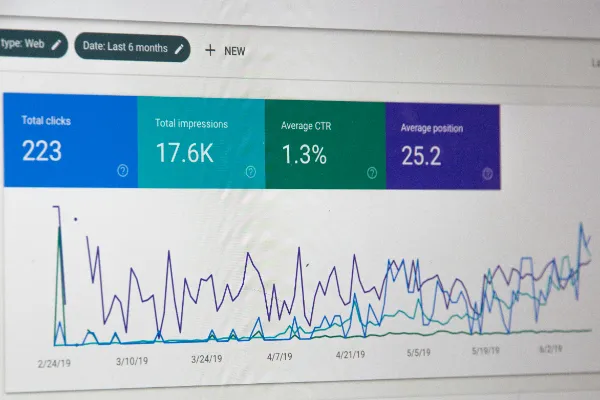
Website traffic is useful, but traffic by itself does not create a sustainable online business.
A website can attract tens of thousands of visitors every month and still struggle to generate meaningful revenue. Another site with a much smaller audience may earn consistently because its traffic has stronger commercial intent and its monetization strategy matches what visitors are trying to accomplish.
Predictable revenue comes from understanding the relationship between traffic, user intent, conversion paths, and monetization.
Successful online businesses rarely depend on one viral article or a temporary increase in search rankings. They build systems that repeatedly attract relevant users, move those users toward useful actions, and generate revenue through several complementary channels.
That may include affiliate marketing, lead generation, advertising, subscriptions, digital products, software, or services.
The goal is not simply to get more visitors. It is to understand what each type of visitor is worth and build a business model around that demand.
Traffic Quality Matters More Than Traffic Volume
One of the most common mistakes in online publishing is treating all website visitors as equally valuable.
They are not.
Consider two websites.
The first receives 200,000 monthly visits from broad informational searches.
The second receives 40,000 visits from people comparing products, requesting quotes, or researching services they intend to buy.
The smaller site may generate substantially more revenue.
This happens because commercial intent affects how likely someone is to take a profitable action.
Someone searching for:
“What is a personal loan?”
is probably researching.
Someone searching for:
“compare personal loan options”
is showing stronger commercial intent.
A visitor searching for:
“apply for a personal loan online”
may be even closer to taking action.
Online businesses need to understand these differences before deciding how to monetize their traffic.
Start by Understanding Why Visitors Arrive
Every monetization strategy should begin with user intent.
Publishers should identify the problems bringing users to the website and group those visitors according to where they are in the decision process.
Traffic generally falls into several broad categories.
Informational Traffic
These users want answers.
They may be researching a topic, learning a skill, or trying to solve a problem.
Informational visitors are often less likely to convert immediately, but they can still be valuable.
Strong educational content can attract backlinks, increase search visibility, build brand recognition, and introduce users to more commercially focused pages.
Commercial Traffic
Commercial visitors are evaluating options.
They may search for comparisons, reviews, alternatives, pricing information, or recommendations.
Examples include:
- Best accounting software for freelancers
- Personal loan comparison
- Best email marketing tools
- Business insurance options
These visitors are often easier to monetize through affiliate partnerships.
Transactional Traffic
Transactional users are closer to taking action.
They may want to purchase a product, submit an application, request a quote, or start a subscription.
These visitors often have the highest immediate revenue potential.
A predictable monetization strategy usually serves all three stages rather than focusing only on transactional keywords.
Affiliate Marketing Turns Recommendations Into Revenue
Affiliate marketing is one of the simplest ways to monetize commercial website traffic.
A publisher recommends a product or service and receives compensation when a visitor completes a defined action.
Depending on the program, that action might be:
- A completed purchase
- A subscription
- A qualified application
- A valid lead
- A software trial
- A booking
Affiliate marketing works particularly well when the commercial recommendation naturally follows from the content.
For example, a website teaching small businesses how to manage invoices might recommend accounting software.
A travel publisher may earn commissions from hotels or booking platforms.
A finance publisher might connect visitors with lenders or financial marketplaces.
The important factor is relevance.
Placing a high-paying affiliate offer on an unrelated article rarely produces predictable revenue.
Lead Generation Can Monetize High-Intent Traffic
Lead generation is another powerful model, especially in industries where a sale does not happen immediately.
This includes sectors such as:
- Finance
- Insurance
- Legal services
- Education
- Home services
- Business services
Instead of waiting for a visitor to complete an expensive purchase, the publisher may earn revenue when the visitor becomes a qualified prospect.
A typical lead-generation funnel might look like:
Search Traffic → Landing Page → Form Completion → Qualified Lead → Buyer → Revenue
This model works because the advertiser handles the later stages of the customer relationship.
The publisher focuses primarily on attracting suitable traffic and generating legitimate interest.
In financial affiliate marketing, for example, networks such as Lead Stack Media work with publishers across personal loan, payday loan, and debt-relief offers, where revenue can be tied to qualified lead generation rather than traditional retail transactions.
For websites already attracting high-intent financial traffic, this can provide a more direct route from search demand to revenue.
Predictable Revenue Requires Tracking the Entire Funnel
Traffic numbers tell only part of the story.
To build predictable revenue, businesses need to understand what happens after visitors arrive.
Suppose a website receives 20,000 visitors each month.
Of those:
2,000 click a commercial link.
500 start a form.
300 complete it.
180 become accepted leads.
Those numbers reveal much more than the initial traffic figure.
They also show where visitors are being lost.
If 20,000 people visit but only 100 click the offer, the problem might be weak relevance or poor placement.
If many users click but very few complete the form, the problem may involve the landing page or application experience.
If submissions are high but acceptance is low, traffic quality may be the issue.
Businesses can therefore improve revenue by optimizing individual stages rather than constantly chasing more traffic.
Revenue Per Visitor Is a Better Business Metric
Page views are useful for understanding reach.
Revenue per visitor is more useful for understanding business performance.
Suppose Site A receives 100,000 visitors and earns $5,000.
Revenue per visitor is $0.05.
Site B receives 30,000 visitors and earns $6,000.
Revenue per visitor is $0.20.
Site B is monetizing its audience four times more effectively.
This does not necessarily mean every page needs aggressive commercial offers.
Some informational content exists primarily to attract users and support SEO.
The important point is understanding the role each page plays.
Useful metrics include:
- Revenue per visitor
- Earnings per click
- Conversion rate
- Revenue per landing page
- Lead acceptance rate
- Average order value
- Revenue per email subscriber
- Customer lifetime value
These metrics help businesses identify where their most valuable traffic originates.
Search Engine Traffic Can Create a Repeatable Acquisition Channel
Organic search can be particularly valuable because users actively reveal their intent through search queries.
Someone searching for a product comparison is already telling the publisher what problem they are trying to solve.
This creates an opportunity to build content around predictable demand.
A strong SEO strategy may include:
- Informational guides
- Comparison pages
- Product reviews
- Alternatives pages
- Commercial landing pages
- Interactive tools
- Frequently asked questions
The business can then connect these pages through internal links.
For example:
“What Is a Personal Loan?” → “Types of Personal Loans” → “Compare Personal Loan Options”
This progression allows users to move naturally from education toward commercial decision-making.
It is generally more effective than trying to make every article directly generate a sale.
Email Turns Temporary Traffic Into an Owned Audience
One weakness of search and social traffic is that visitors can disappear after one session.
Email provides a way to maintain the relationship.
A visitor who joins a newsletter can potentially return many times without the business needing to acquire that person again through Google or paid advertising.
Email audiences can be monetized through:
- Affiliate recommendations
- Sponsored content
- Product launches
- Premium newsletters
- Memberships
- Lead-generation campaigns
The economic advantage becomes significant over time.
If a business pays or invests resources to acquire a visitor once but can communicate with that visitor repeatedly, the lifetime value of the audience increases.
Email also reduces dependence on search algorithms and social platforms.
Digital Products Create Higher Margins
Affiliate businesses depend on outside companies.
Commission rates can change.
Programs can close.
Advertisers may alter eligibility requirements.
Creating proprietary digital products gives businesses more control over revenue.
Examples include:
- Templates
- Courses
- Industry reports
- Spreadsheets
- Research databases
- Downloadable guides
- Plugins
- Digital resources
The strongest digital products usually solve specific problems.
A generic business course may struggle to stand out.
A financial forecasting spreadsheet designed specifically for small agencies has a clearer audience and practical use.
Digital products can also complement affiliate revenue.
A publisher does not have to choose one model exclusively.
Subscription Revenue Improves Predictability
Subscriptions are particularly attractive because they create recurring revenue.
Instead of starting from zero at the beginning of every month, a subscription business begins with an existing base of paying customers.
Possible subscription models include:
- SaaS tools
- Premium newsletters
- Industry databases
- Membership communities
- Research services
- Monitoring platforms
- Premium content
However, recurring revenue only works when recurring value exists.
Users will not continue paying simply because a business prefers predictable income.
The product needs to provide ongoing benefits such as new information, automation, access, convenience, or updated functionality.
This is why useful SaaS products and specialized data platforms often work well with subscriptions.
Diversification Reduces Revenue Risk
Depending on a single monetization channel makes an online business vulnerable.
An affiliate program can reduce commissions.
Advertising rates can fall.
Search rankings can decline.
A major customer can leave.
Diversification helps reduce that exposure.
A content business might combine:
- Affiliate commissions
- Lead-generation revenue
- Display advertising
- Digital products
- Email sponsorships
- Subscriptions
The most efficient diversification normally happens within the same audience.
A finance website, for example, does not need to suddenly start selling travel products.
It might instead expand from personal loan content into debt relief, budgeting tools, credit education, or other closely related financial topics.
A platform such as Lead Stack Media illustrates this principle from the affiliate side by providing access to multiple financial lead-generation offers rather than relying entirely on one product category or buyer.
The broader lesson is that diversification should strengthen the existing audience relationship.
Conversion Optimization Makes Existing Traffic More Valuable
Growing traffic is expensive.
Improving conversion rates can sometimes be faster and more profitable.
Consider a website generating 100 leads from 10,000 monthly visitors.
If improvements increase the number to 130 leads without attracting a single additional visitor, revenue increases by 30%.
Publishers can test areas such as:
- Call-to-action placement
- Page structure
- Form length
- Mobile usability
- Internal linking
- Comparison tables
- Page speed
- Trust signals
- Offer relevance
The purpose is not to pressure users into converting.
Good conversion optimization removes unnecessary friction and makes the next logical action clearer.
A visitor should understand what happens after clicking a button or submitting information.
First-Party Data Helps Businesses Understand What Works
Reliable revenue forecasting becomes easier when businesses collect and analyze their own performance data.
Useful first-party information can reveal:
- Which content generates the most revenue
- Which traffic sources convert best
- Which devices perform differently
- Where users abandon forms
- Which audience segments return
- Which offers produce the strongest accepted conversions
This helps businesses allocate resources intelligently.
If one content cluster consistently generates high-value visitors, it may deserve additional SEO investment.
If another category attracts huge traffic but almost no revenue, the business can decide whether the traffic still provides strategic value.
Data replaces assumptions with measurable evidence.
Predictability Comes From Systems, Not Individual Pages
A single article ranking first on Google can generate significant revenue.
But that is not a predictable business by itself.
Rankings change. Competitors improve. Search behavior shifts.
Predictability comes from building a broader system.
That system might include:
Traffic acquisition → Content → Email capture → Commercial offer → Conversion → Tracking → Optimization
Each part supports the others.
When one page loses traffic, dozens of others continue bringing visitors.
When one affiliate program changes terms, other revenue channels remain active.
When customer acquisition costs increase, an owned email audience continues generating repeat visits.
This creates resilience.
Trust Determines How Long Monetization Works
Short-term revenue can be generated with aggressive advertising.
Long-term revenue requires trust.
Visitors quickly learn whether a website genuinely helps them or exists mainly to push offers.
This is particularly important in financial publishing.
Commercial recommendations should be relevant, accurate, and clearly disclosed.
Publishers should avoid exaggerated claims simply to increase conversions.
A trustworthy website can benefit from:
- Repeat visitors
- Brand searches
- Email subscribers
- Natural backlinks
- Higher engagement
- Stronger advertiser relationships
These advantages compound over time.
Conclusion
Turning website traffic into predictable revenue requires more than increasing visitor numbers.
Online businesses need to understand why people arrive, which visitors have commercial intent, where those users move through the conversion funnel, and which monetization models fit their needs.
Affiliate marketing, lead generation, advertising, digital products, email, and subscriptions can all contribute to a stronger revenue mix.
Platforms such as Lead Stack Media show how performance-based models can connect high-intent financial traffic with multiple relevant offers and buyers, while other industries may rely more heavily on software affiliates, e-commerce, subscriptions, or proprietary products.
The underlying principle remains the same.
Traffic becomes predictable revenue when acquisition, content, monetization, tracking, and user intent are connected into a repeatable system.
The strongest online businesses therefore do not ask only how to get more visitors. They ask which visitors create value, how that value is measured, and how the process can be repeated consistently without sacrificing the quality of the user experience.