Hotel CCTV Redaction: Protecting Guest Privacy Without Slowing Operations
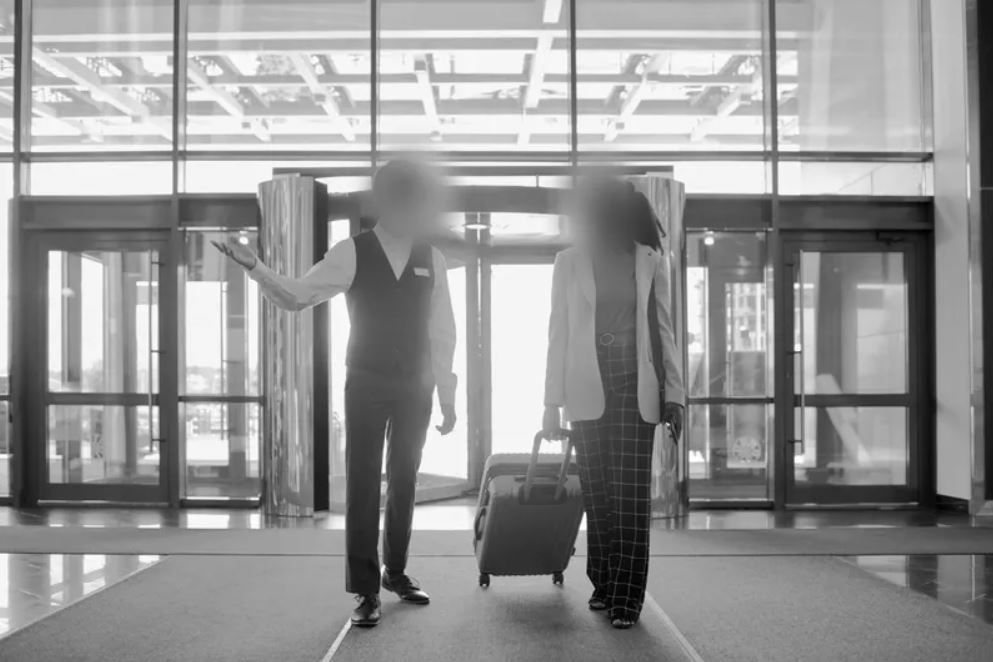
Hotels run on visibility. Front desks, lobbies, elevators, loading bays, parking areas, and back-of-house corridors are all designed to keep operations moving and incidents traceable. That same visibility is what makes CCTV so useful – and what makes hotel footage so sensitive.
A single clip from a hotel camera can reveal far more than the event under review. It may show a guest arriving late at night, a family returning from the pool, a staff member entering a service corridor, or a vehicle pulling into valet parking. In hospitality, that context matters. Guest privacy is part of the service promise, and video handling that feels careless can quickly become a reputational issue.
The practical challenge is not whether hotels should use CCTV. Most already do. The challenge is how to use and share recorded footage without exposing unrelated guests, staff, or visitors in the process.
Why hotel footage is uniquely sensitive?
Unlike many retail or industrial environments, hotels combine security needs with an elevated expectation of discretion. Guests may tolerate surveillance in common areas for safety reasons, but they do not expect their presence, travel patterns, companions, or vehicle details to circulate because someone requested a clip after a dispute or incident.
That sensitivity is heightened in spaces such as:
- lobbies, where arrivals and meetings are visible,
- elevators, where camera angles are tight and faces are prominent,
- parking areas, where vehicles and plates are easily captured,
- reception zones, where screens, paperwork, and room details may appear in frame,
- corridors and access points, where guest movement patterns are easy to infer.
For hotel operators, the privacy issue is rarely the primary subject of the footage. It is everyone else who appears in the same scene.
When recorded hotel video needs to be shared?
Most disclosure scenarios in hospitality are operational rather than theoretical. Video may need to be reviewed or shared when:
- a guest reports theft or property damage,
- an injury claim is submitted,
- management is responding to an insurer,
- outside counsel requests supporting evidence,
- a franchise or corporate compliance team reviews an incident,
- law enforcement asks for a defined segment.
In each of these situations, sending the raw clip is often the fastest option – and often the riskiest. Hotel footage usually contains multiple non-parties. That means every disclosure should begin with a narrower question: what exactly does the recipient need to see?
Redaction starts with scope, not software
Good redaction begins before any blurring takes place. The first step is reducing the clip to the smallest segment that still answers the operational question. If a dispute turns on a two-minute sequence near the check-in desk, there is rarely a good reason to share twenty minutes of hallway, entrance, and lobby footage around it.
That narrower scope reduces manual workload and lowers the chance that unrelated faces, screens, or documents will be exposed. It also makes downstream review more realistic for hotel teams that are already balancing guest service, security, and claims handling.
Faces and license plates are the first layer of protection
In hotel video, the most obvious identifiers are faces and vehicle plates. They are also the elements most likely to trigger complaints if they appear in footage shared outside the property team.
Blurring unrelated guest and staff faces is usually the clearest first step. In parking footage, driveway cameras, and valet areas, license plates deserve the same attention. Even where a plate is not central to the issue, it can still connect a vehicle to a guest, contractor, or employee.
That is one reason many organizations adopt a default rule: if the face or plate is not necessary to the purpose of sharing, it should be blurred before the footage leaves the controlled environment.
Hotels also need to watch for contextual identifiers
Hospitality footage often contains small details that become meaningful once you know the setting. A room folio left on the desk, a guest name on a luggage tag, a monitor at reception, a branded conference badge, or a printed reservation sheet can all become identifiers even when faces are blurred.
This is why hotel CCTV redaction should not be treated as a one-click export. Automation is valuable, but contextual review still matters. A clip that looks “safe enough” at first glance may still reveal more than intended once it is replayed, paused, or distributed beyond the original review group.
Why on-premise, file-based workflows fit hospitality operations
Hotels often work with multiple outside parties: insurers, legal counsel, risk consultants, security vendors, ownership groups, and franchise operators. Every extra handoff increases the number of people and systems that may see raw footage. In practice, that is where avoidable risk starts to build.
Local, file-based redaction helps reduce that risk because the original recording can stay inside the hotel or management company’s own environment while a disclosure-ready copy is prepared for external use.
Gallio PRO supports that model. It is built around recorded photos and video files rather than live streams, which makes it suitable for incident handling, claims response, and internal review workflows. For a practical look at how this process works, see this guide to video anonymization.
Its automatic scope is intentionally narrow: it blurs faces and vehicle license plates in stored files. It does not blur full body silhouettes, and it does not provide real-time anonymization or video stream anonymization. That narrower focus can be useful in hotel environments because it keeps the process predictable and easier to validate before disclosure.
Other elements – such as logos, tattoos, name badges, documents, or screen content – are not detected automatically. These can be masked manually using the built-in editor, which is helpful in hospitality footage where the operational context often matters as much as the camera angle.
Gallio PRO also does not collect logs containing face or license plate detection data and does not store logs containing personal or sensitive information. For hotel operators trying to limit data sprawl while still documenting an evidence-handling workflow, that can be operationally useful.
Protecting privacy without slowing the property team down
In hospitality, the problem with poorly designed review workflows is not just privacy risk – it is delay. If security, legal, and operations all wait on the same small team to manually prepare every clip from scratch, incident response slows down. That creates pressure to “just send the footage,” which is exactly when mistakes happen.
The better approach is a repeatable process:
- trim the footage to the minimum relevant segment,
- apply face and plate blurring first,
- review for contextual identifiers,
- export one disclosure-ready version,
- keep the raw recording controlled internally.
This kind of structure lets hotel teams move quickly without turning speed into over-disclosure.
Guest privacy is also brand protection
Hotels tend to think of CCTV as a safety and claims tool, but guest perception matters just as much. If a privacy complaint grows out of an overly broad video disclosure, the issue quickly moves beyond security operations and into brand reputation. A hotel that handles footage carefully communicates discretion. A hotel that forwards raw clips too freely communicates the opposite.
That is why video redaction in hospitality should be treated as part of the guest trust model. Not every clip needs to be shared, and almost no clip should be shared in its rawest form simply because it is faster.
FAQ – Hotel CCTV Redaction
Should hotels ever send raw lobby or elevator footage to a guest?
In many cases, a redacted and narrowed clip is safer because hotel footage usually contains unrelated guests, staff, or visitors in the same frame.
Are license plates worth blurring in hotel parking footage?
Yes. In valet, garage, and driveway footage, plates can easily be linked to a guest or employee and are often unnecessary to the purpose of the disclosure.
Can Gallio PRO automatically detect badges, documents, or screen content?
No. Automatic detection is limited to faces and license plates. Other identifiers can be masked manually in the built-in editor.
Does Gallio PRO anonymize live hotel camera feeds?
No. It works with stored photos and pre-recorded video files rather than real-time or live-stream footage.